


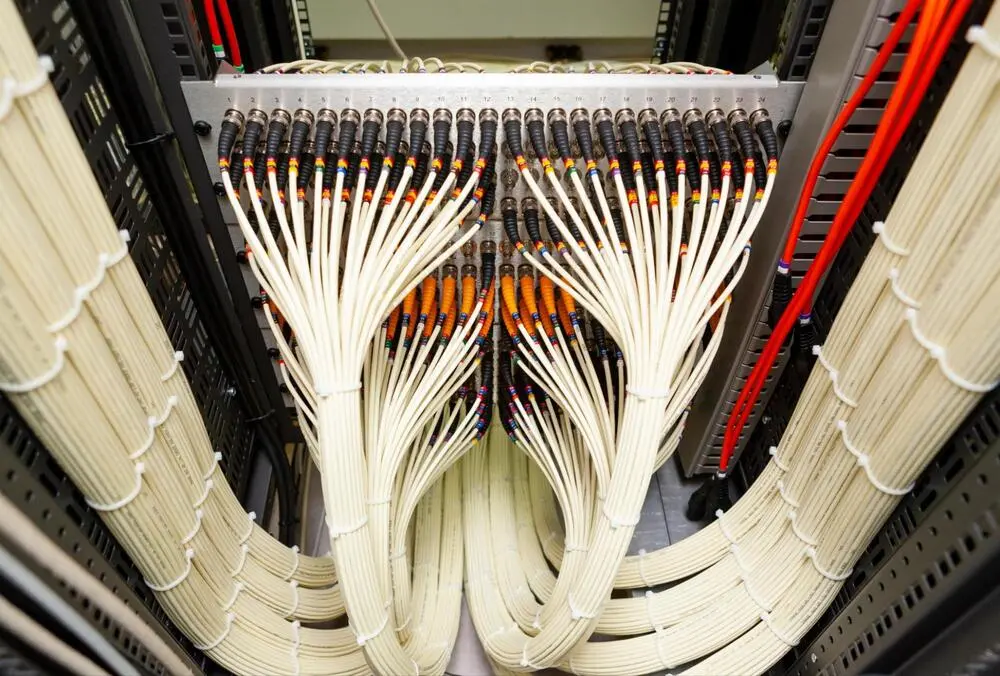
Structured Cabling vs. Traditional Cabling: Which is Better
At Comnet Systems Pte Ltd, we realize the critical importance of network infrastructure in the digital age. For the past 30 years, we’ve provided future-proofed structured cabling solutions to enterprises in Singapore—SMEs, large corporations, and government organizations alike. As ICT and ELV cabling infrastructure specialists, we’ve witnessed firsthand the benefits of an optimal cabling system in streamlining operations, reducing downtime, and enabling long-term growth. In this article, we’ll outline the contrasts between structured cabling and conventional point-to-point cabling systems, and why structured cabling is the wiser investment for your business.
What Is Traditional Cabling?
Traditional cabling, also called point-to-point cabling, is the traditional and more linear way of cabling devices. Each device is connected individually to another using a specific cable—Hence, the term “point-to-point.”
Key Characteristics of Traditional Cabling:
- Devices are cabled using one-to-one cable runs.
- Cable management is generally bad or unorganized.
- Systems commonly require new cable installations for every new device.
- Troubleshooting is time-consuming due to the unorganized installation.
Though this method could be suitable for very small configurations with a limited number of devices, it quickly becomes useless and unorganized with additional equipment involved.
What Is Structured Cabling?
Structured cabling is a new, tidy way of connecting network infrastructure. It employs standardized parts and a central patch panel, enabling several devices to connect through a common, modular system.
- Key Elements of Structured Cabling
- Horizontal cabling
- Backbone cabling
- Telecommunications rooms
- Patch panels and outlets
- Standardized cabling pathways
Structured cabling provides an easy way of adding or removing devices without having to reintroduce the entire wiring system.
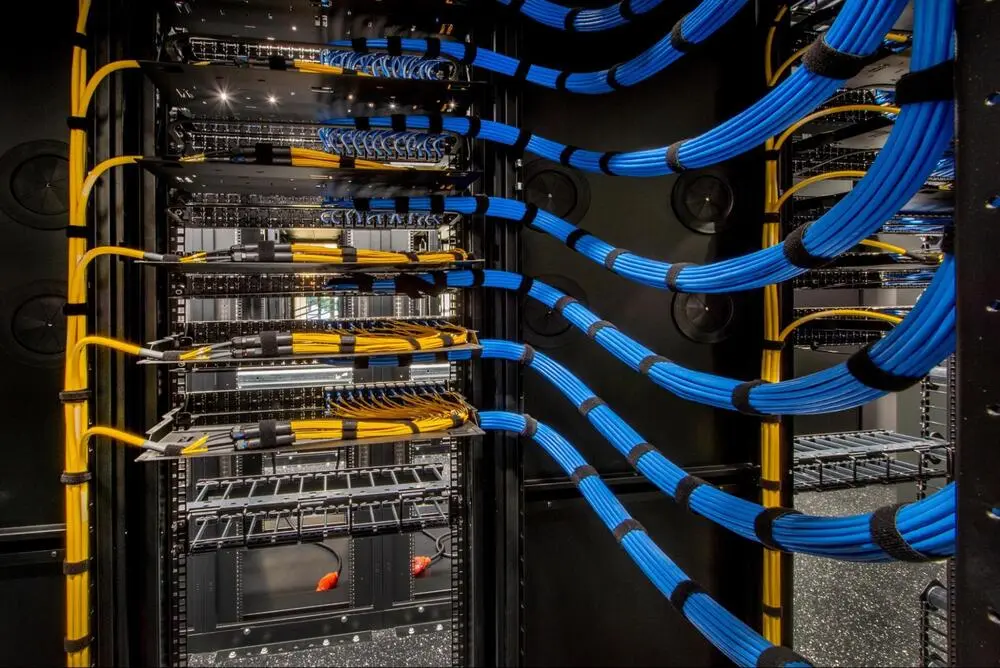
Blue and yellow structured cabling in a data center rack, illustrating a modern network infrastructure by Comnet Systems

Why Structured Cabling is the Smarter Option
As a top structured cabling solutions provider, we have assisted numerous clients in moving from legacy configurations to smarter, more flexible solutions. Structured cabling is the smarter choice for the following reasons:
1. Future-Proof Infrastructure
Technology is evolving at a fast pace. Future growth is considered while constructing cabling systems. From adding users, upgrading systems, to cloud migration, our structured cabling solutions ensure your infrastructure will keep up.
2. Cost Savings Long-Term
While initial cost may be greater than traditional cabling, structured systems minimize the need for rewiring and maintenance on an ongoing basis. Here at Comnet Systems, our customers have been able to cut operational expenses by as much as 30% once they upgraded.
3. Faster Troubleshooting
Our organized cabling installations are tidy, systematic, and easy to work with. This equates to faster troubleshooting and decreased downtime, essential for businesses reliant on uninterrupted connectivity.
4. Professional Appearance and Compliance
A well-designed cabling system not only looks nicer but also meets industry regulation standards. Our BCA registration (ME04/L5) and ISO 9001 are your guarantee of compliance with all required codes and specifications.
Our Singapore Structured Cabling Services
At Comnet Systems, our structured cabling solutions are customised to service voice, data, and video applications. What we provide covers:
- Copper and fibre cabling
- Design and installation for LAN/WAN
- Set up and expansion of the data centre
- Patch panel termination and labeling
- Server room design and management
- Testing and certification of all installations
Each and every project that we work on is backed by our qualified engineers and certified technicians. From the initial site surveys to maintenance after the installation, we make sure that each and every detail is handled.

Why Choose Comnet Systems?
We’re honored to be one of the most reliable providers of structured cabling that Singapore companies depend on. Here’s what makes us stand out:
- Over 30 years of ICT infrastructure experience
- Executed 3,000+ Singapore projects
- Certified and in accordance with BCA ME04/L5 and ISO 9001 standards
- Leading expertise in fiber optic and copper-based technologies
- Outstanding record with government institutions, schools, and business organizations
Whether installing a new office, upgrading an existing one, or embarking on a greenfield build of a data centre, we have the capability and expertise to provide high-performance structured cabling solutions that will endure.
Making the Smart Cabling Choice
Structured cabling is not just wire—it’s the foundation of your digital infrastructure. Unlike traditional cabling, it offers flexibility, reliability, and room for growth. Comnet Systems Pte Ltd has decades of experience helping businesses in Singapore move to better, scalable, and future-proof network cabling Singapore.
If you are considering upgrading or learning about the advantages of structured cabling for your company, we are here to assist you. Leverage our expertise to gain a competitive advantage.
Call us today for a consultation and discover how our structured cabling in Singapore can help optimize your business operations.
Frequently Asked Questions (FAQ)
1. What is the difference between structured cabling and traditional cabling?
Structured cabling is a standardized approach to network infrastructure that organizes data, voice, and video cabling in a central system, while traditional cabling typically involves a point-to-point layout with more cable clutter and limited scalability.
2. Why is structured cabling better for modern businesses?
Structured cabling offers improved network performance, easier maintenance, and better scalability, making it ideal for businesses planning to expand or upgrade their IT systems in the future.
3. Is structured cabling more expensive than traditional wiring?
While the initial cost of structured cabling may be higher, it significantly reduces long-term expenses by minimizing rewiring, simplifying troubleshooting, and decreasing system downtime.
4. How does structured cabling support ELV systems?
Structured cabling integrates seamlessly with ELV cabling systems (Extra Low Voltage) like CCTV, access control, and intercoms, ensuring optimal performance and organized network infrastructure.
5. Who provides structured cabling services in Singapore?
Comnet Systems Pte Ltd is a trusted provider of structured cabling and network cabling in Singapore, offering BCA-registered and ISO-certified solutions tailored to both commercial and specialized environments.
6. Can structured cabling improve my network speed?
Yes, a well-implemented structured cabling system reduces signal interference and provides a stable foundation for high-speed data transmission across your business network.
7. Is structured cabling future-proof?
Absolutely. Structured cabling supports business scalability by allowing easy upgrades, user additions, and seamless integration with cloud-based systems and new technologies.
Related Articles:


What is the difference between OM3, OM4, OM5 Multimode Fiber
We understand all the advantages we can get from using Fiber Optics as means for data transmission...

What is Structured Cabling?
Structured Cabling is a broad term for the linking of network devices in a system that consists of...

Choosing Between OM3 and OM4 Fiber Optics Cables
Overview The OM3 and OM4 fibers are laser-optimized with a 50/125 core, which is made to comply...


Singapore Office (HQ)
| Comnet Systems Pte Ltd | ||
| Address: | Block 1002 Jalan Bukit Merah #07-01/03 Singapore 159456 |
|
| Main: | +(65) 6272 3383 Click to Call | |
| Support: | Tech@Comnet.sg | |
| Enquiry: | Sales@Comnet.sg |
Philippines Office
| Comnet Systems Integration Inc. | ||
| Address: | Unit 6G , CBC Corporate Center, 724 Shaw Blvd, City of Mandaluyong, Second District, NCR, Philippines, 1555 |
|
| Main: | +63 2 85247088 Click to Call | |
| Support: | general@comnet.ph |