

How to Read a Structured Cabling Specification Sheet
A structured cabling specification sheet details what will be installed, how it will operate and if it is suitable for a building. A validation of the specification before confirming a quotation can prevent facilities managers and the IT department from installing unsuitable equipment, making costly errors and causing future networking bottlenecks. When choosing structured cabling companies in Singapore, every major specification must be understood. This is particularly important if different structured cabling companies have submitted a quotation for the same piece of work.
Why A Structured Cabling Specification Sheet Matters


A specification sheet is not just a bill of materials. It defines the technical requirements of the complete cabling system, including the type of cable, test specifications, termination hardware, labelling scheme, installation requirements, etc. Checking the above information enables facilities managers and purchasing teams to compare quotations on an equal footing. It also helps to highlight any missing items that could push up costs for a project down the road.
Most organisations that make investments in structured cabling companies in Singapore depend on professional structured cabling services to help prepare correct specifications based on present operational requirements.
Step 1: Check The Cable Category
The first area to check is the cable category. There are various types of cable which support different network speeds.
| Cable Type | Typical Application | Supports |
|---|---|---|
| Cat6 | Standard office networks | Up to 1 Gbps |
| Cat6A | High-speed enterprise networks | Up to 10 Gbps |
| Cat7 | High-performance environments | 10 Gbps with additional shielding |
| OM4 Fibre | Data centres and backbone connections | High-bandwidth fibre applications |
The cable that is selected should accommodate the current and future needs of the network. It is cheaper to install cables designed for higher capacity when the network is built than to upgrade at a later date.
Professional structured cabling services can advise on the proper cable category for the building usage, network traffic and your future growth.
Step 2: Verify TIA-568 Compliance
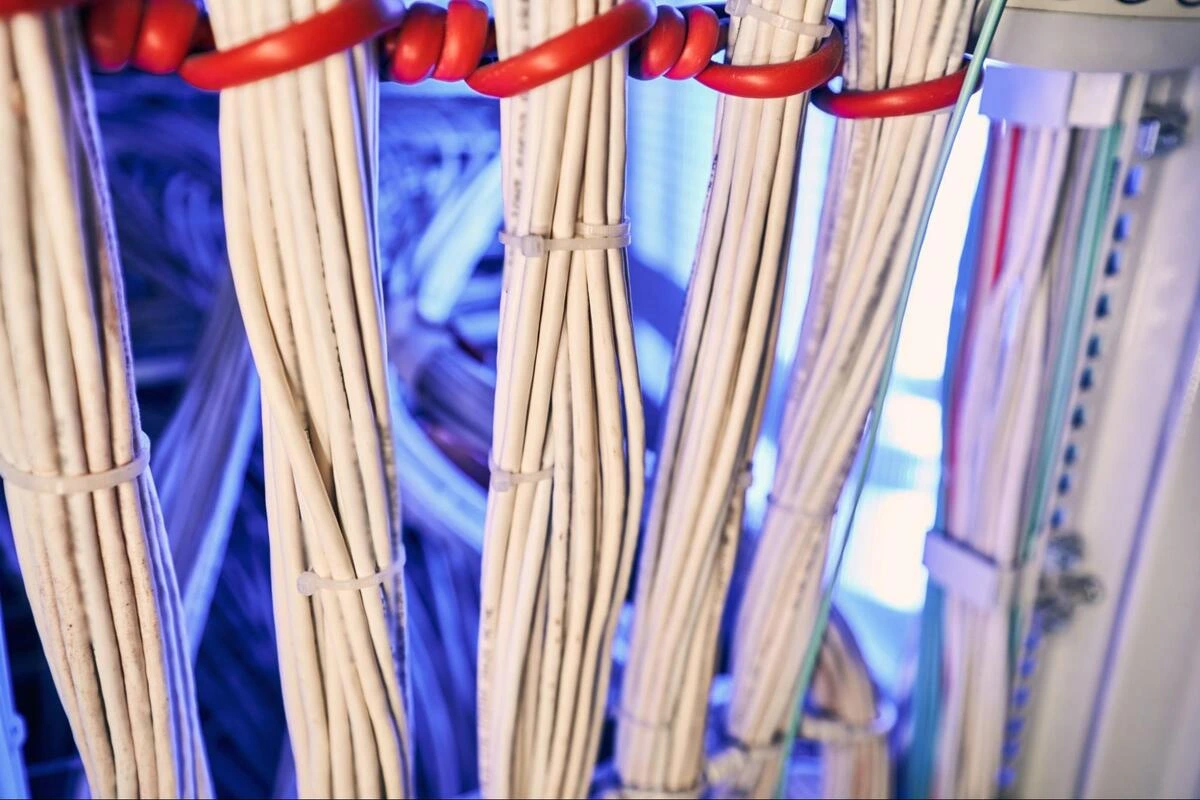
The specification sheet should refer to known standards of the industry.
For most commercial installations, the specification should include compliance with TIA-568. This specifies requirements for structured cabling system design, installation and testing. Verification of this standard ensures that the proposed system is in accordance with the accepted installation standards and can operate with the various network components.
Structured cabling companies should clearly state recognised industry standards in their specification sheets.
Step 3: Confirm Patch Panel Port Counts
Often, the patch panels don’t get checked into the quoting. Use the number of ports to match both current and future needs. For instance, if a building needs 180 network outlets now, purchasing a 180-port patch panel doesn’t allow additional outlets in the future.
Additional spare ports should be part of a realistic specification for future device additions, office refurbishments or equipment upgrades.
Any company planning for structured cabling in Singapore should ensure that the patch panel capacity matches the requirements of the future devices.
Step 4: Review Testing And Certification Requirements
All structured cabling installations shall be tested. A specification sheet to confirm that all cabling installed will be tested to verify the performance of the cabling using approved test equipment. Test results shall confirm that each installed cable is within the required performance category.
Most dependable structured cabling services should comprise certification reports, test documentation and a log book of performance as part of the final handover.
Step 5: Check Labelling And Documentation
Proper documentation makes sure maintenance will be easier. Use a uniform system for labelling each cable, patch panel, receptacle, and cabinet. If relevant, provide the floor plans, rack positions, and cable schedule.
Good documentation can minimise troubleshooting time so that future upgrades or escalations will be easier for IT teams to track down the network connections.
Step 6: Look For Common Specification Errors
Some quotation discrepancies may be so subtle that you might not notice, but could impact quality or your budget.
Before approving a proposal, check for the following:
- The cable category doesn’t match the project requirement.
- Frequently failing to include a reference to TIA-568 compliance.
- Any patch panel that doesn’t contain enough spares.
- Partial testing or certification requirements.
- Labelling or documentation details are absent.
- Mismatch in quantities between drawings and materials schedules.
Early detection helps avoid ordering errors, unwanted project variations, and installation delays when engaging structured cabling companies.
Comparing Structured Cabling Quotations

When looking at several quotations, it can be misleading to simply compare the total cost stated. However, you should compare the new cable category, compliance and testing requirements, documentation, warranty coverage, and future expansion. All of these can greatly determine the long-term value of the installation.
The facilities managers commonly examine proposals from various structured cabling companies to ensure that each quotation is of the same technical standard prior to approval.
Working With An Experienced Structured Cabling Provider
The contractor selection is not only about pricing. The contractor shall have the knowledge to explain all items listed on the specification sheet, clarify technical recommendations, and make available all documentation required.
At Comnet Systems, we collaborate with facilities managers and IT teams on pre-installation review of structured cabling specifications. Our process involves reviewing technical specifications, validating certain standards for compliance and ensuring the quality of the future-ready solution.
For companies looking for structured cabling in Singapore, it’s often more advantageous to deal with a provider who can supply complete structured cabling services, from design and installation to testing, certification and maintenance.
Making Better Decisions Before Project Approval
Knowing what a structured cabling spec sheet means, you can make fewer assumptions when evaluating contractors. Always reviewing the specification sheet thoroughly can help companies make wise decisions before a quotation is approved.
Using experienced structured cabling services makes it easier to check technical specifications and hence avoid costly purchasing errors. At Comnet Systems, we work with organisations and evaluate structured cabling specifications in simple terms while providing assured solutions for future operation of the business.
Related Articles:

ELV Cabling Solution
As an ELV Cabling Specialist with BCA ME04 L5 Work-head, besides data system, we integrate all...


Singapore Office (HQ)
| Comnet Systems Pte Ltd | ||
| Address: | Block 1002 Jalan Bukit Merah #07-01/03 Singapore 159456 |
|
| Main: | +(65) 6272 3383 Click to Call | |
| Support: | Tech@Comnet.sg | |
| Enquiry: | Sales@Comnet.sg |
Philippines Office
| Comnet Systems Integration Inc. | ||
| Address: | Unit 6G , CBC Corporate Center, 724 Shaw Blvd, City of Mandaluyong, Second District, NCR, Philippines, 1555 |
|
| Main: | +63 2 85247088 Click to Call | |
| Support: | general@comnet.ph |